Begin with the neckline and the dress surface
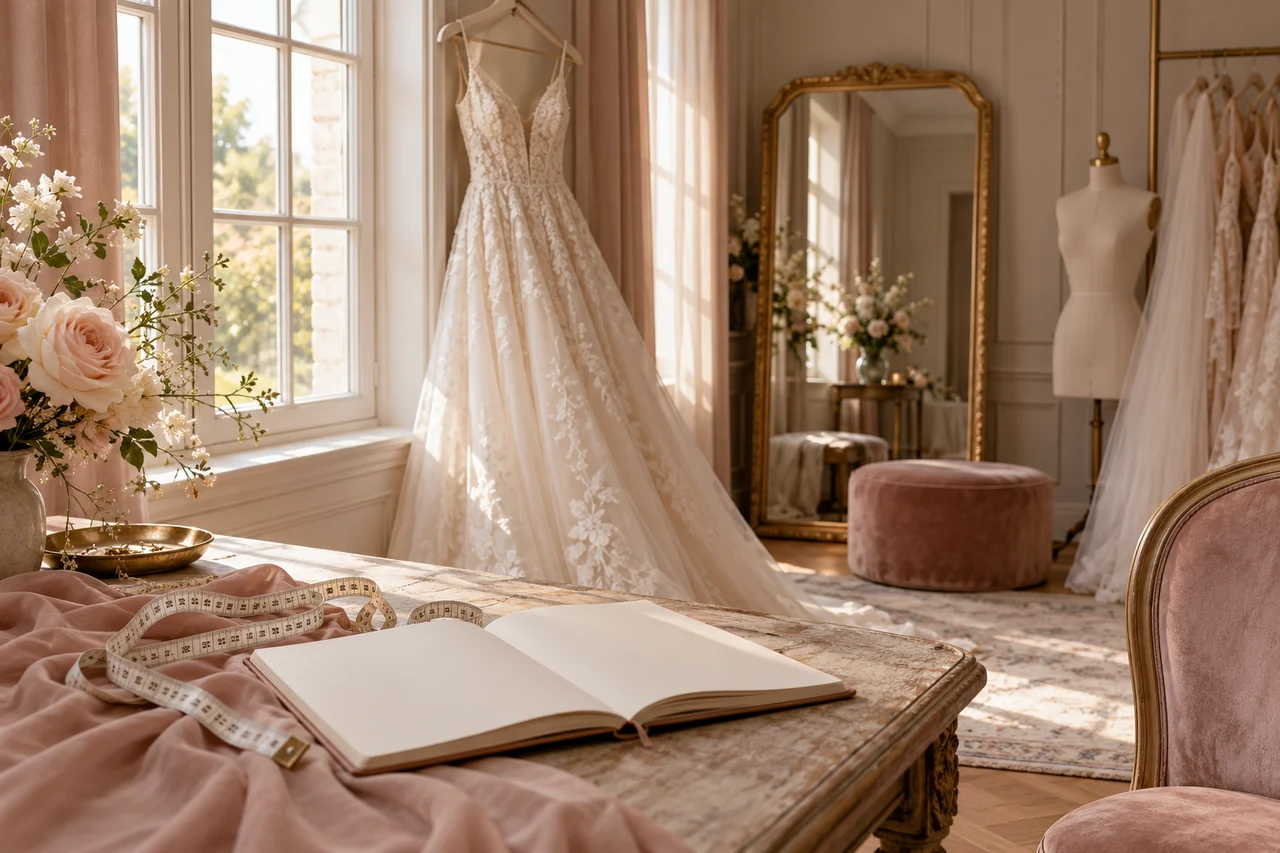
Lay out the dress details before shopping for finishing touches. A heavily embellished bodice may need only small earrings. A plain neckline can leave room for a more expressive necklace or a dramatic veil. Neither approach is a rule. The aim is a clear relationship between the pieces rather than a collection of individually striking objects.
Choose the focal point you most want to notice in photographs. It might be your face framed by earrings, the back of the dress, or a long veil moving behind you. If several elements compete, remove one temporarily and compare. Try the look at a normal conversational distance rather than judging every detail in a close-up mirror.
Veil length changes the whole outline
A short veil can keep the skirt visible and feel playful. A fingertip length can add movement without extending far behind you. Longer veils create a continuous line with the gown or a separate layer beyond the train. Retailer names and measurements vary, so ask for dimensions rather than choosing from a label alone.
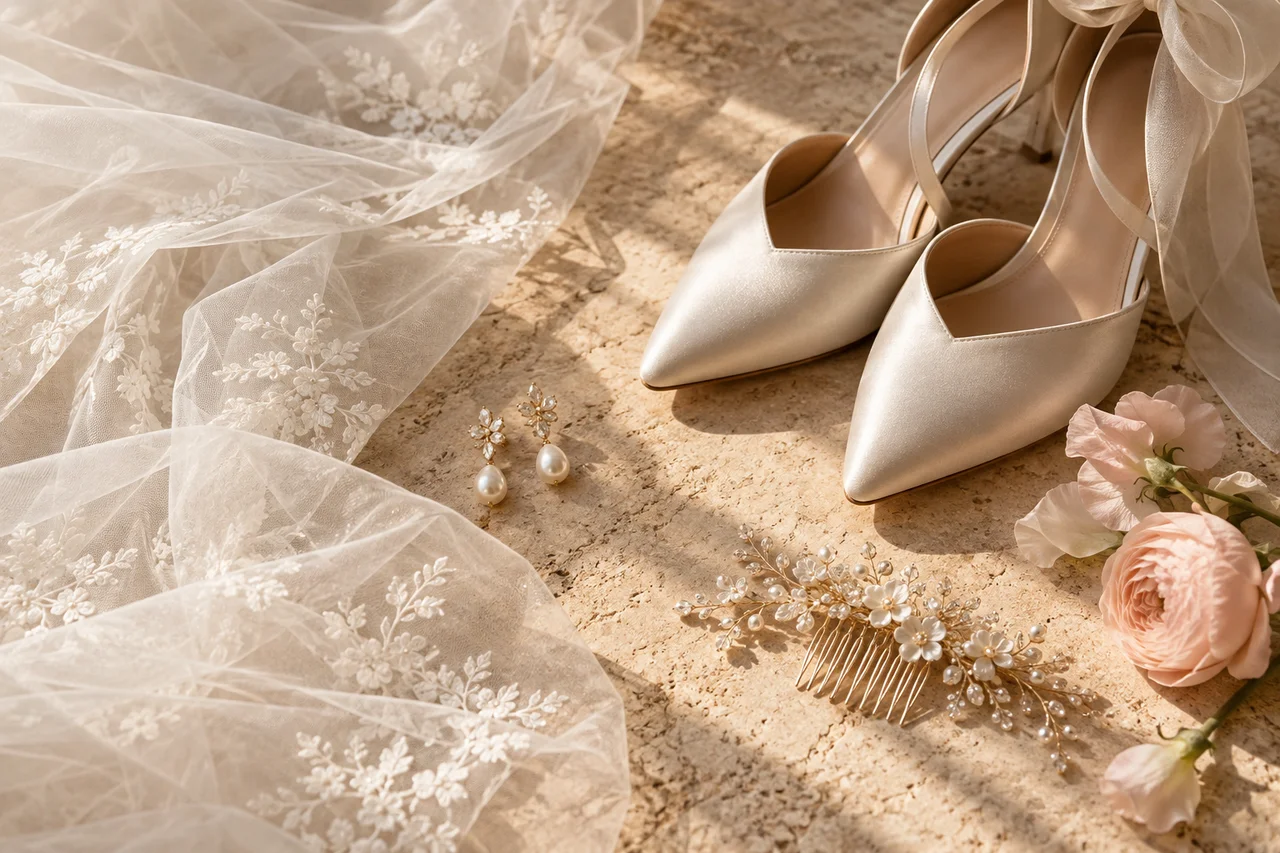
Try a veil against the exact gown color where possible. A similar ivory can still look noticeably warmer or cooler. Compare plain tulle, lace edging, and scattered detail. Check whether embroidery catches on the dress and whether the comb sits comfortably. Plan who will remove or reposition the veil after the ceremony, and practice that action before the day.
Jewelry: consider shape before quantity
Earrings interact with your neckline, hairstyle, and any hair ornament. A drop shape can feel elegant with an open neckline; a small stud can sit quietly beside detailed lace. If you love an heirloom, begin there and choose other pieces around it. Emotional meaning is a valid styling reason even when the metals do not match perfectly.
Wear new earrings for a reasonable trial period before the wedding so you can judge weight and comfort. Notice whether they catch on loose hair or veil fabric. Avoid changing several variables at the last fitting: jewelry, undergarments, and shoes all deserve their own attention. A photograph of the full look helps reveal balance that a close mirror view misses.
Shoes are part of the fitting plan
Choose shoes with the route through your day in mind: indoor floors, a lawn, sand, stairs, or a mixture. Heel shape and sole grip can matter as much as height. If you plan a second pair, discuss the difference in height with your alterations professional before the hem is finalized. A hem fitted to one shoe may drag with another.
Try shoes indoors on a suitable clean surface while any return conditions still apply. Check toe room, straps, and stability. Do not assume pain will disappear after breaking them in. If you use orthotics or require particular support, include those needs early. A secure shoe that lets you move naturally is a strong foundation for the entire outfit.
Hair accessories need a practical trial
Bring a comb, pins, or headpiece to a hair trial if you have one. Placement affects both appearance and security. A piece that looks small in its box can be prominent when worn near the face. Ask how it will be anchored and whether it works with the veil attachment rather than choosing each independently.
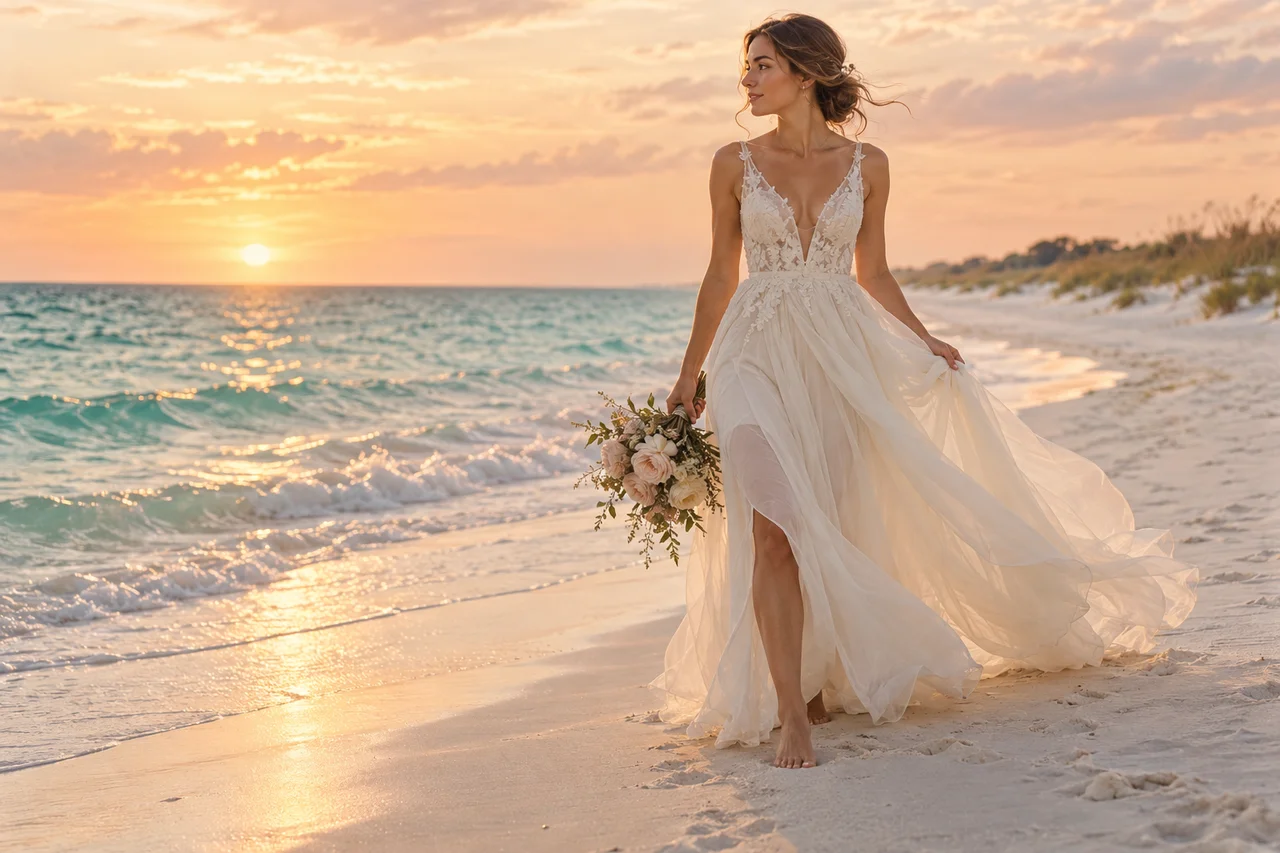
For outdoor events, discuss a plan for movement and wind without expecting any hairstyle to stay untouched in every condition. Keep a few suitable spare pins with the person helping you. If a headpiece presses painfully after several minutes, change its placement or reconsider it. A beautiful photograph cannot compensate for hours of discomfort.
Bags, wraps, and useful small objects
A small bag may hold personal items between events, but you may not want to carry it during the ceremony. Decide who will keep it and where it will be stored. Test the clasp and capacity with the actual contents. A decorative bag that cannot hold what you need should be treated as an accessory rather than your practical storage plan.
A wrap can be helpful for cooler interiors or changing weather, depending on the occasion. Check its texture against delicate embellishment and its proportion over the neckline. Pack small essentials thoughtfully and keep sprays or cosmetics away from the gown. Ask the retailer or garment-care professional about fabric-safe handling rather than experimenting on wedding-day stains.
Create a fitting-day accessory kit
Bring shoes, intended undergarments, and any accessories that affect the dress fit or overall balance. Keep jewelry in separate soft compartments to prevent snagging. Photograph the final arrangement and label any items another person needs to help with. If something has not arrived, tell the alterations professional instead of substituting an unexplained different height or shape.
Try holding your bouquet or a similar object while wearing bracelets and rings. Check that sleeves, cuffs, or hand jewelry do not catch. Sit down in the complete look and stand up again. These ordinary movements expose small problems while there is still time to solve them. The purpose of a fitting is wearable clothing, not only a still image.
Edit the look, then stop adding
Before buying the last accessory, ask what role it fills. Does it repeat a texture, add a meaningful personal detail, or solve a practical need? If its only purpose is to make the outfit feel more “bridal,” pause. Your wedding clothing already belongs to you and the occasion. It does not require a prescribed number of extra pieces.
Finish with a simple inventory: what you will wear, what you will carry, what someone else will hold, and what can remain packed. Keep the list with your wedding-day notes. A coherent bridal look often comes from a few deliberate choices, and the freedom to leave an otherwise lovely piece for another celebration.